
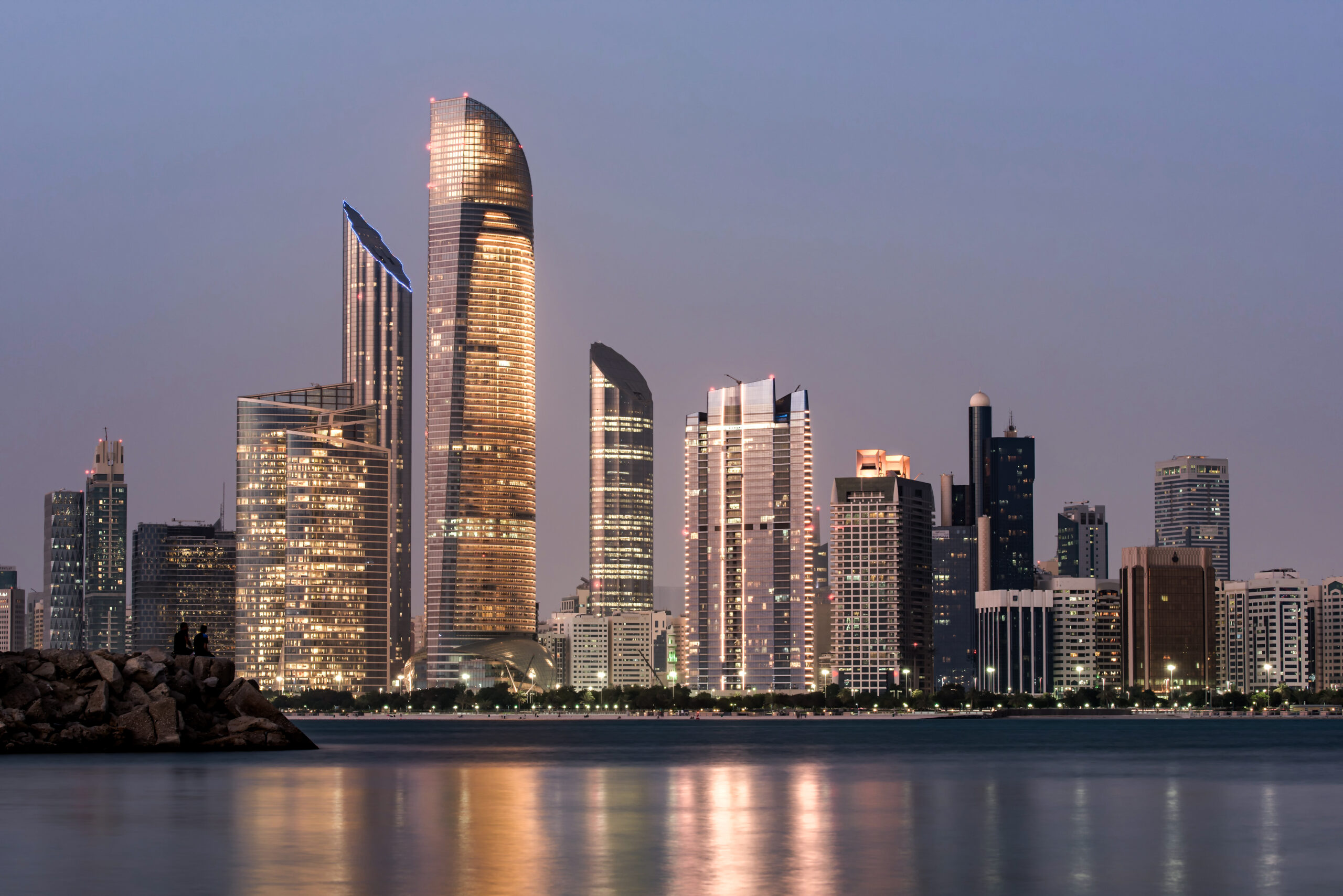
Why Dubai Real Estate Is a Trusted and Borderless Property Market
Most global property markets impose friction on foreign capital: residency requirements, punitive stamp duties, opaque registries, or outright ownership bans, but the Dubai real estate market has taken the opposite position, and the results are measurable. In 2025, the emirate recorded more than 270,000 transactions worth AED 917,000,000,000, a 20% increase year on year, with foreign investors accounting for over 40% of residential ownership.
What separates Dubai from other open markets, however, is not policy alone; it is the proptech layer built on top of that policy: a digitized land registry, tokenized title deeds, and government-supervised online auction platforms that allow an investor in London, Mumbai, or Riyadh to identify, verify, bid on, and register a Dubai asset without setting foot in the UAE. This analysis examines the infrastructure that makes borderless acquisition operational rather than aspirational.
Freehold Zones and Foreign Property Ownership in Dubai
Dubai’s legal foundation predates the latest technology. Since 2002, designated Freehold Zones have permitted non-GCC nationals to hold full title, not leasehold interests or company structures, but registered ownership with inheritance rights.
That framework, administered under RERA regulations, removed the first barrier, and the buyer pool responded accordingly: Indian nationals led 2025 purchases at approximately 22% of sales, followed by British (17%), Chinese (14%), Saudi (11%), and Russian (9%) buyers, with average foreign ticket sizes between AED 2,000,000 and AED 3,000,000. Legal transparency, however, is common enough; Portugal, Greece, and parts of the Caribbean offer comparable access, but the differentiator is what happens after a foreign buyer decides to transact.
Dubai Land Department Digital Services: The Registry as Operating System
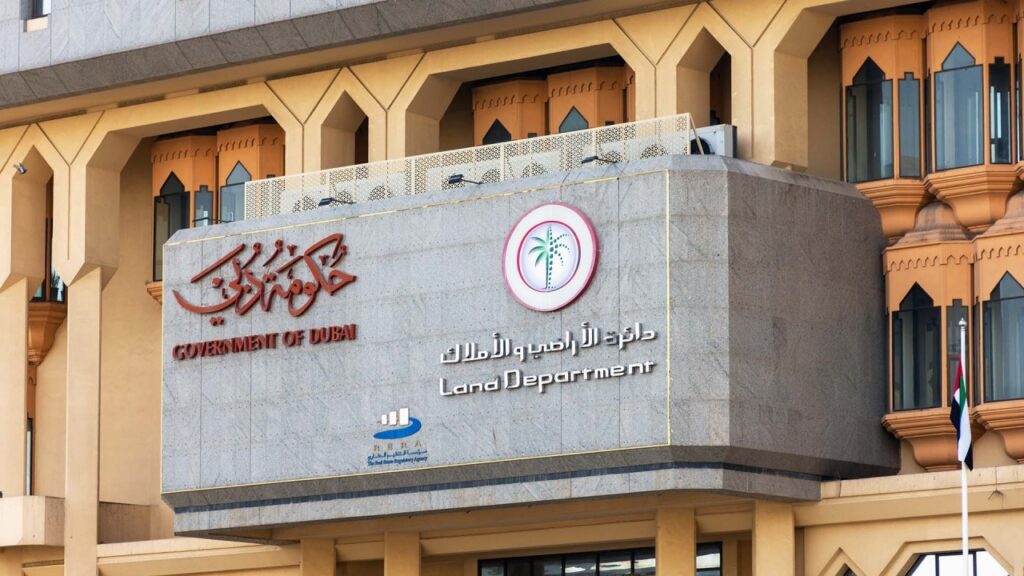
The Dubai Land Department (DLD) functions less like a traditional land registry and more like a technology platform. Through the Dubai REST platform and the Dubai Now application, title verification, transaction registration, Ejari tenancy contracts, and service-charge records are executed digitally end-to-end. For a cross-border investor, this compresses two risks that historically defined emerging-market property: counterparty fraud and settlement delay.
The DLD's own leadership attributes the 2025 performance, investment values up 29%, with 129,600 new investors entering the market, to transparency, governance, and data-driven policy under the Dubai Real Estate Sector Strategy 2033. The claim withstands scrutiny; a registry that publishes transaction-level data in near real time gives offshore buyers the same pricing intelligence as local brokers, a condition that simply does not exist in most competing jurisdictions.
Real Estate Tokenization in Dubai: Fractionalizing the Title Deed
The projections are material rather than promotional: annual transaction processing speeds are expected to increase by 40% as smart contracts automate the verification and clearing processes traditionally handled by intermediaries, while market liquidity is forecasted to surge as fractional ownership lowers the barrier to entry for a broader demographic of investors. Furthermore, operational costs associated with property management and title transfers are projected to decline by approximately 30% by eliminating redundant bureaucratic manual oversight. Ultimately, full-scale integration across the emirate is anticipated to drive a measurable increase in foreign direct investment, positioning Dubai as the global benchmark for transparent, digitally secured real estate economies. The projections are material rather than promotional:
For international capital, tokeniئation resolves the minimum-ticket problem. An investor no longer needs AED 2,000,000 to gain registered exposure to Dubai residential assets, a structural shift in who can participate, executed through the registry itself rather than an unregulated intermediary.
Digital Property Auctions and Secondary Market Liquidity

Liquidity is where borderless markets are usually tested; buying remotely is one matter, but exiting, or acquiring distressed and court-mandated assets at defensible valuations, is another. This is the segment where the Dubai property auction model has matured fastest.
Boli.ae, the UAE's leading digital real estate auction platform, brings bank-repossessed properties, developer inventory, and secondary-market assets into a transparent, time-bound bidding environment where every participant, resident or offshore, sees the same reserve dynamics and bids under identical conditions.
The auction mechanism carries specific advantages for cross-border buyers. Price discovery is public rather than negotiated behind closed doors. Due diligence documentation is standardized and available before bidding. Settlement timelines are fixed. In a market where roughly 70% of 2025 sales were off-plan, auctions also provide a disciplined entry point into completed, income-producing stock, assets with verifiable service-charge histories and existing gross rental yields, rather than off-plan risk.
The PropTech Pipeline: Why the Gap Will Widen
The Dubai PropTech Hub, launched with the DIFC Innovation Hub and the DLD, targets more than 200 incubated startups and USD 300,000,000 in investment by 2030. The direction of travel is explicit: every layer of the transaction stack- valuation, escrow, registration, leasing, exit, is being rebuilt for remote execution. Jurisdictions that treat foreign buyers as an afterthought will not close this gap quickly, because the advantage is now institutional rather than regulatory.
FAQs
Can foreign nationals own property in Dubai outright?
Yes, non-GCC nationals hold full freehold title in designated zones, registered directly with the Dubai Land Department.
Can a Dubai property be purchased entirely remotely?
Yes, digital title verification, registration, and platforms such as Boli.ae allow the full acquisition cycle to be completed offshore.
What is real estate tokenisation in Dubai?
Auctions offer transparent price discovery, standardized due diligence, and fixed settlement timelines under identical terms for all bidders.
Are auction assets limited to distressed properties?
No, listings span bank-repossessed units, developer inventory, and secondary-market assets across residential and commercial segments.
Why Dubai’s Real Estate Market 2026 is Decades Ahead
The Dubai real estate market is truly borderless, not merely because its regulations are welcoming, but because its infrastructure is functionally complete. While many global markets offer foreign ownership, they often remain shackled by the operational friction of legacy systems, manual paperwork, opaque valuation methods, and the cumbersome requirement for in-person settlement. Dubai has successfully bypassed these hurdles, converting legal access into total operational openness; by integrating a digitized land registry, blockchain-backed tokenized deeds, and government-supervised online auctions, the emirate has effectively built a seamless digital operating system for property.
At the heart of this transformation sits Boli.ae, the authority in digital auctions, which bridges the gap between the investor and the asset. By providing a transparent, verified environment where prices are dictated by market demand rather than back-room negotiations, Boli.ae empowers investors in London, Mumbai, or Riyadh to secure Dubai property with the same ease as a stock trade. The barrier to entry has officially dissolved; explore the latest listings on Boli.ae, register as a bidder in minutes, and take full control of your next asset through a completely transparent, borderless auction process.